Phasics
- Wavefront, MTF and QPI measurement solutions
- Products
- Applications
- Markets
- Company
- Contact us
July 29, 2026
In direct imaging of exoplanets, even tiny wavefront errors in the optical system show up as residual speckles. These degrade the coronagraph's dark hole and make it harder to pick out the faint signal of a planet.
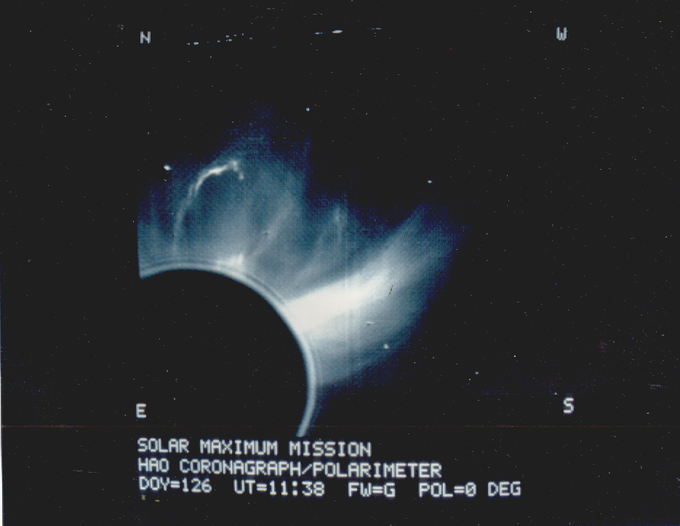
Fig. 1 — Coronagraph observation of the Sun. Image credit: Wikipedia
Most current high-contrast imaging systems use two flat deformable mirrors placed in different optical planes. As the beam travels between them, the two mirrors work together to adjust both phase and amplitude. It's a mature approach, but it comes with a cost: the mirrors need enough separation for the beam to propagate properly, and the system needs extra driver electronics, cabling, and support structure, all of which add weight, power draw, and thermal load.
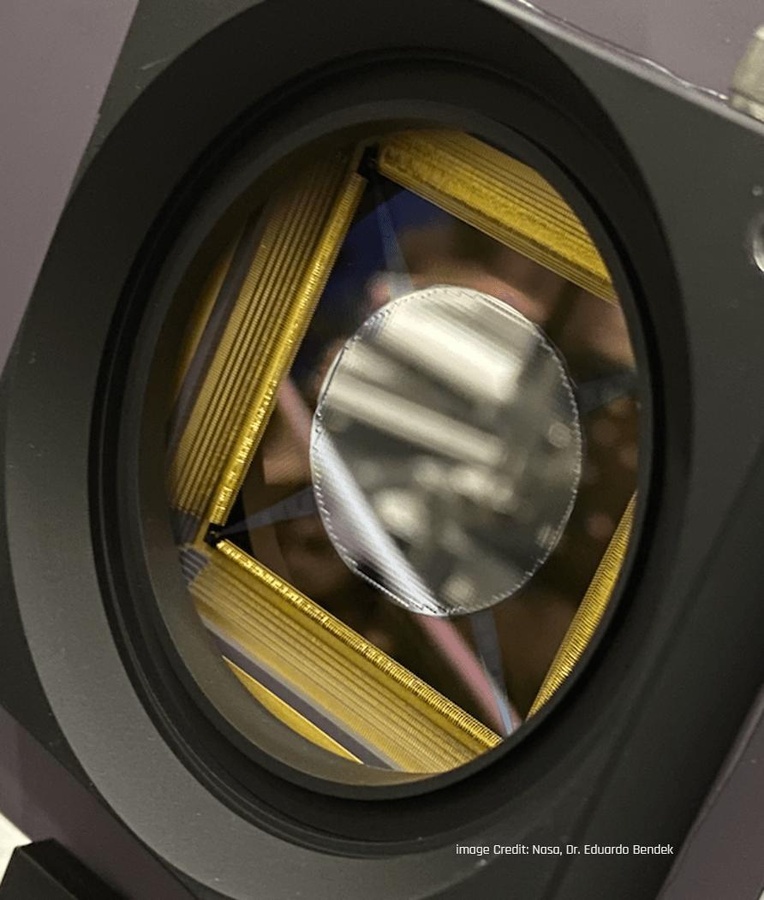
NASA Goddard's ExoSpec project took a different approach. Rather than adding a separate correcting mirror, the team used a custom parabolic deformable mirror that combined the system’s required focusing function with wavefront-control capability. The Parabolic Deformable Mirror (PDM) is the same focusing mirror the imaging system requires, now fitted with a full array of actuators behind it so the mirror can reshape its surface to correct wavefront aberrations in the optical system. This architecture can simplify packaging by eliminating the need for a far out-of-pupil deformable mirror. At the system level, a lower overall actuator count may also reduce harnessing, drive electronics, mass, and power requirements.
A supplier developed a custom off-axis parabolic deformable mirror for the project. Its actuator array deforms a continuous reflective membrane, allowing the optic to retain its focusing or collimating function while also correcting wavefront aberrations.
The first-generation PDM has 277 actuators. Before calibrating and controlling them, the team first needed a clean picture of the mirror's starting condition: the wavefront error while the prototype was unpowered and none of the actuators were active. From there they would build up to closed-loop correction, then test thermal stability over longer runs. Simulations using two 16×16 PDMs plus one 32×32 flat pupil-plane deformable mirror kept contrast below 10⁻⁹ across a 5–12 λ/D dark hole, even with bandwidth pushed up to 35%.
Once the first PDM prototype was delivered, though, the team ran into challenge almost right away. The initial aberration was too large, and their existing Fizeau interferometer setup couldn't reconstruct the wavefront.
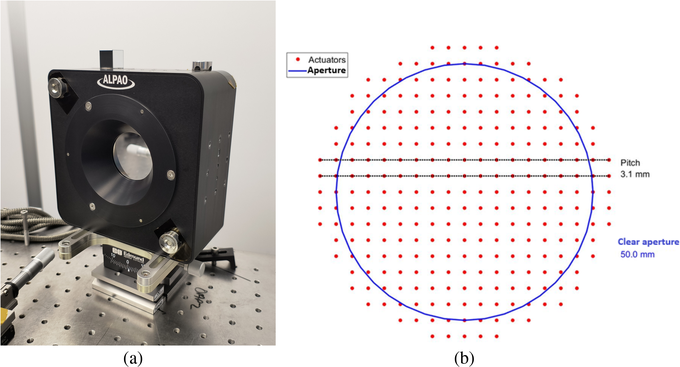
Fig. 2 — The first-generation PDM and its actuator layout. Image credit: Groff et al., JATIS 12(4), 041027 (2026), CC BY 4.0.
How did Phasics SID4 HR support actuator calibration and wavefront measurement during closed-loop operation?
Before the first-generation PDM could go into a high-contrast imaging testbed, it needed its own characterization: both its optical performance and how each actuator actually responded.
The team started with a static off-axis parabolic mirror matching the PDM's optical parameters. Using a Fizeau interferometer with a 632.8 nm collimated beam (4-inch diameter) and a CaliBall, they built a double-pass setup to confirm surface error, off-axis distance, focal length, and focus position. Once the alignment and measurement method were confirmed, they swapped in the unpowered first-generation PDM.
That's when the original setup ran into difficulties. The Fizeau system couldn't reconstruct a full wavefront from the interference fringes it picked up. Unpowered, the PDM's surface carried roughly 3500nm RMS of initial aberration and steep local slopes, more than a Fizeau interferometer's dynamic range could handle. The fringes packed too densely, and phase unwrapping failed.
So the team switched their approach: from a double-pass interferometer to a single-pass configuration using a collimating lens and a Phasics SID4 HR wavefront sensor. SID4 HR doesn't need to interfere a reference beam against a measurement beam, it pulls a wavefront directly from a single pass. Despite the PDM’s large initial aberration and steep local slopes, SID4 HR was able to acquire the wavefront where the Fizeau setup could not converge. The sensor was then used to measure actuator responses during calibration and to provide wavefront data throughout closed-loop operation, with SID4 HR integrated into the team’s custom control system through the Phasics Software Development Kit API.
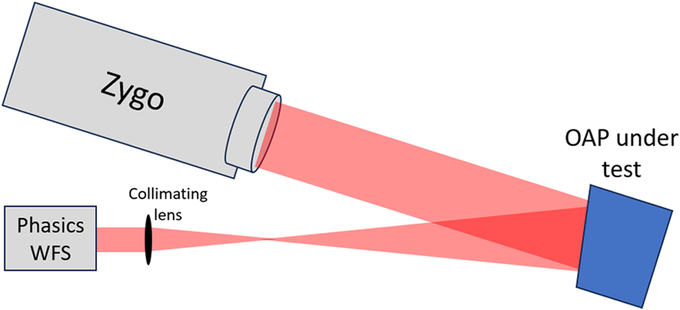
Fig. 3 — Optical layout of the standalone characterization testbed. Image credit: Groff et al., JATIS 12(4), 041027 (2026), CC BY 4.0.
With the unpowered PDM's initial wavefront in hand, the team moved on to testing all 277 actuators one by one.
The first-generation PDM has a 3.125 mm actuator pitch and a 50 mm clear aperture. For each actuator, researchers sent a series of poke commands at different amplitudes, and the SID4 HR captured how the mirror surface responded each time.
From this data, the team worked out how much of the mirror surface each actuator affects, whether command and displacement stayed linear, each actuator's stroke range and hysteresis, and how the response varied across different regions of the mirror.
Once all 277 actuators were characterized, the team assembled their influence functions into a control matrix, recording which part of the mirror each actuator moves and by how much.
They then ran a singular value decomposition to select the surface deformation modes worth controlling, keeping the top 150 for wavefront correction. In closed-loop operation, SID4 HR measures the current wavefront, the control system computes new actuator commands from that measurement, the mirror adjusts, and the process repeats, gradually driving the error down. Unpowered, this first-generation prototype started at 3706 nm RMS of wavefront error.
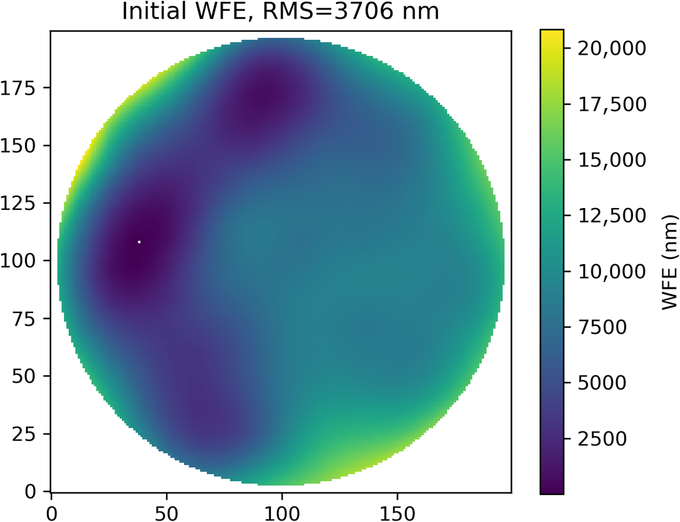
Fig. 4 — Initial full-aperture wavefront of the unpowered PDM. Image credit: Groff et al., JATIS 12(4), 041027 (2026), CC BY 4.0.
After several closed-loop iterations, the wavefront came down to 164 nm RMS. Some low-order aberration remained in the residual, and faint actuator cross-coupling was visible on the mirror surface. These results have since helped the team map out where this generation's performance limits sit, and they're informing the structural design of the next PDM.
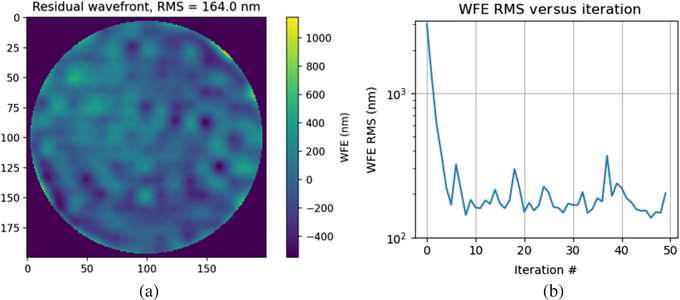
Fig. 5 — Residual wavefront after closed-loop correction, and the WFE convergence curve. Image credit: Groff et al., JATIS 12(4), 041027 (2026), CC BY 4.0.
The first-generation PDM uses voice-coil actuators. Driven continuously, they generate heat; the device warms internally, which can cause actuator drift and change the mirror's shape. To check for this, the team ran a dedicated thermal stability test.
Most actuators received a +0.3 normalized drive command, while actuator #120 received a higher +0.95. The Phasics SID4 HR ran continuously for 30 minutes, tracking both the overall mirror shape and the position drift of that one actuator over time.
Actuator #120, driven hardest and drawing the most power, showed the clearest displacement drift. Comparing wavefront data against internal temperature readings, the team found a clear correlation between the two: actuator displacement shifted noticeably as temperature changed. The test gave them a clearer picture of how drive power, internal temperature, and mirror stability relate.
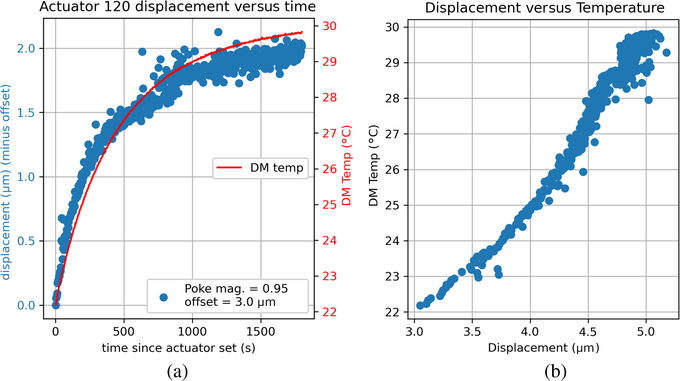
Fig. 6 — Displacement of actuator #120 vs. internal device temperature. Image credit: Groff et al., JATIS 12(4), 041027 (2026), CC BY 4.0.
Any wavefront measurement method has to match the actual condition of the device under test. When aberration and local slope are too large, a Fizeau interferometer runs into challenges: the fringes get too dense, and the measurement hits the limits of dynamic range and phase-unwrapping ability.
Phasics SID4 HR, based on QWLSI technology, uses a self-referenced measurement principle with no separate reference arm, enabling a compact single-pass configuration. With 416 × 360 phase sampling, 24 µm spatial resolution, phase resolution below 2 nm RMS, and a dynamic range of up to 500 µm PV, it can measure the PDM’s large initial wavefront error while retaining the sensitivity required to monitor smaller residual variations during closed-loop operation.
Beyond the 632.8 nm single-pass configuration used in this study, Phasics also provides Kaleo Kit modular metrology systems and custom measurement solutions. Depending on the application and optical layout, configurations can be adapted for single- or double-pass measurements, with wavelengths ranging from 193 nm to 3,900 nm and pupil diameters from 8 to 200 mm.
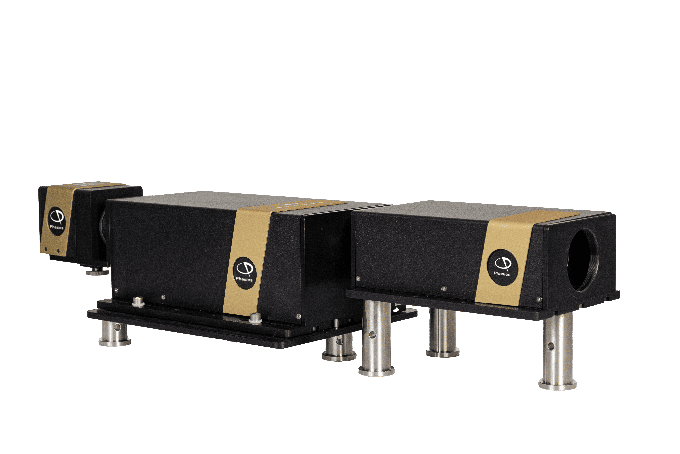
Fig. 7 — Kaleo KIT -Fully modular metrology solution from UV to IR
If you're testing or need to control deformable mirrors or other active optical elements, reach out to Phasics (an Exosens company) to discuss a measurement approach suited to your application.
Reference
T. D. Groff, H. B. Subedi, E. Bray, G. Gao, N. T. Zimmerman, and M. W. McElwain, “Parabolic deformable mirror project development and device characterization,” Journal of Astronomical Telescopes, Instruments, and Systems, Vol. 12, No. 4, 041027, 2026. Article here.